


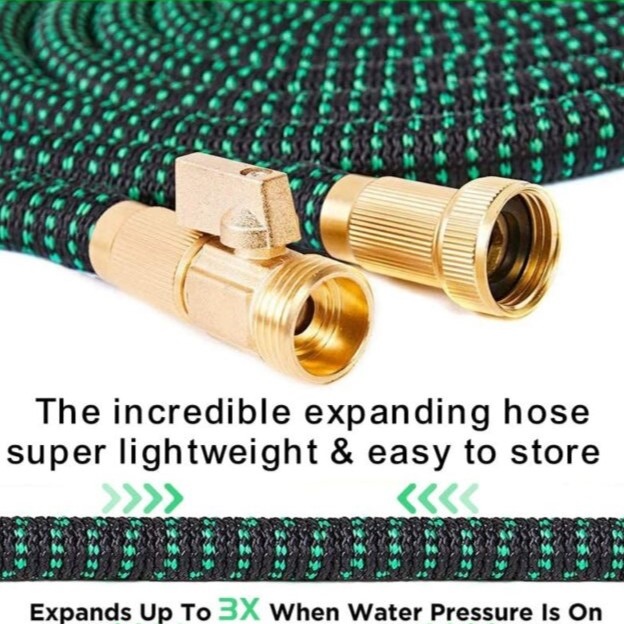
Few things are more frustrating during your garden routine than a steady spray of water hitting your legs instead of your plants. If you have noticed your expandable garden hose leaking at the connector, you are not alone. This is the single most common failure point for lightweight irrigation systems. While the hose material itself is often blamed, the real culprit is usually the fitting material. To ensure long-term durability and a watertight seal, understanding the debate of brass vs. plastic hose fittings is essential. This guide explores why metal is the “gold standard” for kink-free expandable hoses and how you can stop the leaks for good.
The Root Cause: Why Plastic Fittings Fail
Most entry-level hoses come with plastic connectors to keep costs low. However, these fittings are the primary reason for expandable garden hose repair requests.
-
Cross-Threading (Stripping): Plastic threads are soft. Consequently, if you don’t align the hose perfectly with the spigot, the metal faucet threads will “chew” through the plastic, destroying the seal forever.
-
Thermal Expansion & Cracking: Plastic becomes brittle when exposed to UV rays and fluctuating outdoor temperatures. Furthermore, high water pressure can cause microscopic stress fractures that eventually lead to a catastrophic burst.
-
Deformation Under Pressure: As an expandable hose grows, it exerts significant force on the connector. Plastic often warps under this tension, allowing water to spray out of the sides.
The Metal Advantage: Why Brass is the Leak-Proof King
Professional-grade kink-free expandable garden hoses utilize solid brass or high-grade aluminum fittings for a reason: mechanical integrity.
-
Corrosion Resistance: Solid brass does not rust and resists the mineral buildup found in hard water. Consequently, your connection remains smooth and easy to unscrew season after season.
-
Crush-Proof Strength: Metal fittings can withstand being stepped on or run over by a lawnmower—accidents that would instantly shatter a plastic alternative.
-
The Perfect Seal: Metal-to-metal contact (with a high-quality rubber washer) creates a compression seal that can handle high-pressure bursts without leaking.
Consequently, switching to brass doesn’t just stop current leaks; it prevents future ones. Therefore, it is the most cost-effective upgrade you can make for your irrigation setup.
Comparison: Plastic vs. Brass Connectors
| Feature | Plastic Connectors | Solid Brass / Aluminum Fittings |
| Durability | Low (Crack-prone) | Extreme (Crush-proof) |
| Leak Resistance | Poor (Warps under pressure) | Superior (Watertight seal) |
| Thread Integrity | Easy to strip/cross-thread | High precision / Permanent |
| Weather Resistance | UV-Sensitive (Brittle) | Weatherproof |
How to Fix a Leaking Connector in 3 Steps
If your garden hose is leaking at the connector, follow this quick checklist before buying a replacement:
-
Check the Washer: 90% of leaks are caused by a missing or dry-rotted rubber washer. Replace the old O-ring with a high-quality silicone washer for a better grip.
-
Inspect for Cracks: If you have plastic fittings, check for hairline fractures. If you see one, the fitting must be replaced; it cannot be “glued.”
-
Upgrade to Metal: If the threads are stripped, the best expandable hose repair is to install a brass “mender” or replacement kit.
Conclusion: Invest in a Connection That Lasts
A garden hose is only as good as its weakest link—which is almost always the connector.
Stop wasting water and patience on flimsy plastic parts that fail after a single summer. Instead, choose Leak-protection kink-free expandable garden hoses equipped with solid brass fittings. Consequently, you will enjoy a seamless, dry, and efficient watering experience every time you turn on the tap. Experience the reliability of metal-to-metal precision today. Your garden deserves a steady flow, not a steady leak.