

Expandable Garden Hose Water Pressure: Why It Feels Weaker Than Traditional Hoses
Many users ask: “Why does my expandable garden hose feel like it has less water pressure than a traditional hose? Is it a product problem or a usage issue?”
The answer is usually related to how an expandable garden hose manages water pressure. Unlike traditional PVC hoses, expandable hoses need part of the incoming water pressure to expand the inner tube before delivering water through the nozzle. This process can reduce the pressure available at the outlet.
For homeowners and professional irrigation users, understanding expandable hose pressure loss helps choose the correct hose length, nozzle type, and water supply configuration.
Why Does an Expandable Garden Hose Have Lower Water Pressure?
The Hose Uses Water Pressure to Expand Its Inner Tube
The main difference between an expandable hose and a traditional garden hose is the internal structure.
A traditional hose keeps a fixed diameter. Most incoming water pressure directly pushes water toward the nozzle.
An expandable garden hose works differently:
- Water enters the inner latex or TPU tube.
- The tube expands as water pressure increases.
- The hose reaches its full length.
- Water flows through the nozzle for irrigation or cleaning.
During this expansion process, some water pressure is temporarily used to stretch the hose material.
Therefore, users may feel that the initial water output is weaker compared with a rigid traditional hose.
Low Household Water Pressure Makes the Difference More Noticeable
Household water pressure directly affects expandable hose performance.
Most residential water systems provide around 40–60 PSI. When the supply pressure is already low, an expandable hose has less pressure available for expansion and final water flow.
The following situations can create noticeable pressure reduction:
| Water Supply Condition | Possible Effect |
|---|---|
| Low household PSI | Hose expands slowly and produces a weaker outlet pressure |
| Long expandable hose length | More pressure is required to expand the tube |
| Small nozzle opening | Higher internal pressure but slower water flow |
| Multiple water outlets are running | Reduced available pressure |
If your home has naturally low water pressure, selecting a shorter expandable hose can provide better performance.
How Does Hose Length Affect Expandable Hose Water Pressure?
Longer Hoses Create Greater Pressure Loss
Hose length is one of the most important factors affecting water pressure.
A 100 ft expandable garden hose requires more water volume to fully expand than a 25 ft or 50 ft model. During this process, pressure loss becomes more noticeable.
For users with average or low household water pressure:
- A 25 ft hose usually expands faster.
- A 50 ft hose offers a good balance between coverage and pressure.
- A 100 ft hose may require stronger water supply pressure.
The longer the hose, the more energy the water needs to overcome friction and expand the tube.
Recommended Hose Length Based on Water Pressure
| Household Water Pressure | Recommended Expandable Hose Length |
|---|---|
| Below 40 PSI | 25 ft–50 ft expandable hose |
| 40–60 PSI | 50 ft expandable hose |
| Above 60 PSI | 75 ft–100 ft expandable hose |
Choosing the correct length helps reduce expandable garden hose low water pressure problems.
Expandable Hose vs Traditional Hose: Why Do They Feel Different?
Structural Differences Affect Water Flow
Expandable hoses and traditional hoses use different designs.
| Feature | Expandable Garden Hose | Traditional Garden Hose |
|---|---|---|
| Inner structure | Flexible expandable tube | Fixed rigid tube |
| Storage size | Compact after draining | Large and heavy |
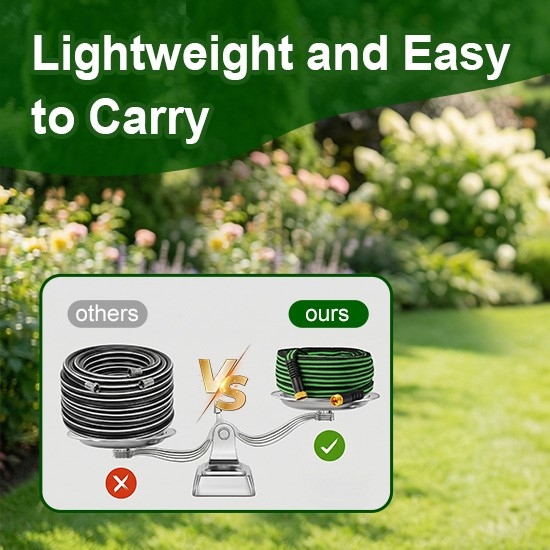
| Weight | Lightweight | Heavier |
| Expansion process | Requires water pressure | No expansion required |
| Pressure response | Depends on supply pressure | More stable outlet pressure |
A traditional hose may feel stronger because it delivers water immediately through a fixed tube.
An expandable hose focuses more on lightweight handling, easy storage, and portability.
Does Lower Pressure Mean the Product Is Defective?
Not necessarily.
A slight difference in water pressure is a normal result of expandable hose construction.
However, abnormal performance may come from installation or usage issues:
Common Usage Problems
1. The Hose Is Not Fully Expanded
If the hose does not reach its designed length, check:
- Water supply pressure
- Nozzle opening
- Connection blockage
- Hose bending or twisting
A partially expanded hose usually cannot provide maximum flow.
2. The Spray Nozzle Restricts Water Flow
Some adjustable nozzles reduce outlet diameter.
When the nozzle opening is too small:
- Internal pressure increases.
- Water flow decreases.
- The spray distance may become shorter.
Using a nozzle with a suitable flow capacity can improve performance.
3. The Hose Diameter Does Not Match the Application
For heavy irrigation tasks, a larger diameter hose may provide better water volume.
For daily gardening, washing cars, and outdoor cleaning, a standard expandable garden hose is usually sufficient.
How to Improve Expandable Garden Hose Water Pressure?
Practical Solutions for Better Performance
If your expandable hose feels weaker, try these methods:
Check Your Water Source Pressure
Before replacing the hose, test whether your outdoor faucet provides sufficient pressure.
A hose cannot create additional pressure beyond the water supply.
Choose a Shorter Hose Length
For low-pressure homes, a shorter model is usually more effective.
A 50 ft expandable garden hose often provides better pressure performance than a 100 ft model under the same conditions.
Use a High-Flow Nozzle
A nozzle with better flow capacity reduces unnecessary restrictions.
Avoid extremely narrow spray patterns when maximum water output is required.
Select a Hose With Flow Control Features
Some expandable hoses include flow control valves.
These accessories help users adjust water volume and improve control during different applications.
How to Choose the Best Expandable Garden Hose for Low Water Pressure?
Key Factors for Buyers and Distributors
For users with low water pressure, consider these purchasing factors:
| Selection Factor | Recommendation |
|---|---|
| Hose length | Prefer 25 ft–50 ft models |
| Inner tube material | Choose durable TPU or multi-layer latex construction |
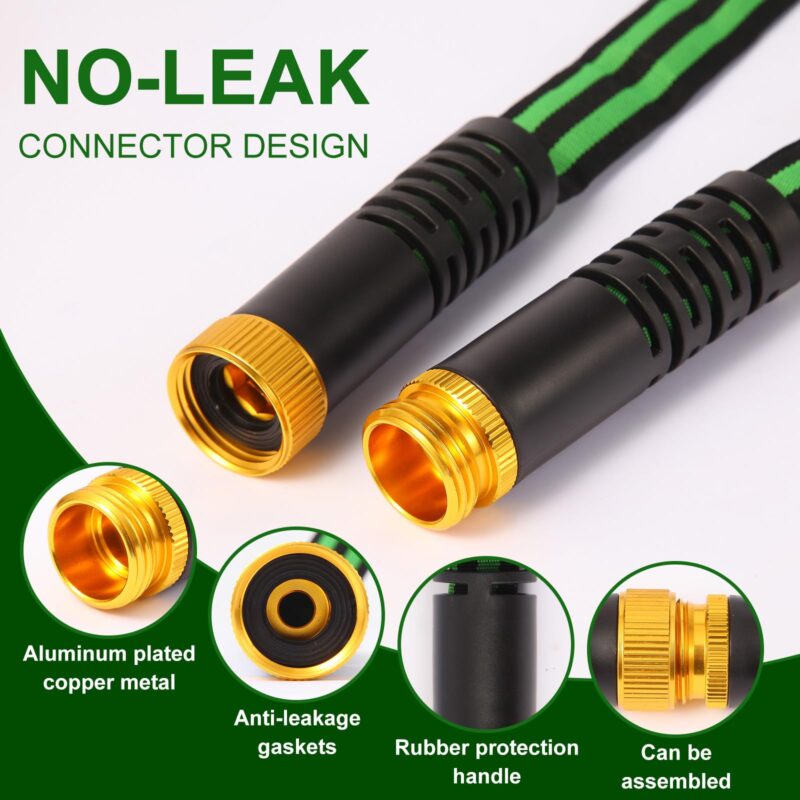
| Connector quality | Select corrosion-resistant metal fittings |
| Nozzle compatibility | Use high-flow spray nozzles |
| Valve design | Consider models with flow control options |
For garden irrigation suppliers and distributors, offering multiple length options allows customers to select products based on different water pressure conditions.
Final Summary: Understanding Expandable Garden Hose Water Pressure
The difference between an expandable garden hose and a traditional hose is mainly caused by their working principles. An expandable hose uses part of the incoming water pressure to expand its flexible inner tube, which can make the outlet pressure feel slightly lower.
However, this does not always indicate a product quality issue.
Water supply pressure, hose length, nozzle design, and usage conditions all influence final performance. For homes with lower water pressure, choosing a 50 ft or shorter expandable garden hose and using a suitable nozzle can provide a better balance between flexibility and water flow.
For garden irrigation suppliers and OEM partners, understanding these pressure factors helps provide customers with more suitable hose solutions for different applications.