

Choosing the right garden hose assortment is essential for distributors and private-label brands targeting different retail channels. A hose that performs well in a hardware store may not attract the same buyers at a garden center or online.
The key is to match garden hose types to channel-specific buying behavior. Hardware store customers often prioritize durability, garden center shoppers value convenience, e-commerce buyers respond to visual demonstrations, and discount retail customers focus on affordability.
Understanding these differences helps garden hose distributors and brand owners build more effective product assortments, improve product positioning, and support sell-through across multiple sales channels.
1. Hardware Stores: Prioritize Durable Garden Hoses
Hardware store customers often include contractors, landscapers, and homeowners tackling demanding outdoor projects. These buyers typically look for reliable performance, robust construction, and products suited to repeated use.
Recommended garden hose types: Rubber hoses and heavy-duty garden hoses
Rubber hoses are worth considering for buyers who prioritize flexibility and durability across changing outdoor conditions. Heavy-duty hoses can also serve customers using hose reels, irrigation systems, and other demanding watering equipment, depending on the product’s specifications.
Product Positioning for Hardware Stores
- Key selling points: Durable construction, kink resistance, temperature performance, and suitability for repeated use
- Target buyers: Contractors, landscapers, and experienced homeowners
- Packaging strategy: Use clear product specifications, including hose diameter, length, material, working pressure, and applicable temperature limits
- Marketing language: “Built for demanding use,” “heavy-duty construction,” and “designed for repeated outdoor use”
For distributors, the priority is to provide technical information that helps customers compare products and select the right hose for their applications.
2. Garden Centers: Focus on Lightweight and Easy-to-Store Hoses
Garden center shoppers often purchase hoses alongside plants, soil, planters, and other gardening supplies. Many are looking for convenient products for routine watering rather than equipment for demanding professional applications.
Recommended garden hose types: Expandable hoses and lightweight fabric hoses
Expandable hoses appeal to customers who want a compact storage solution. Their length and size change during use, depending on water pressure and the product design, making storage convenience an important selling point.
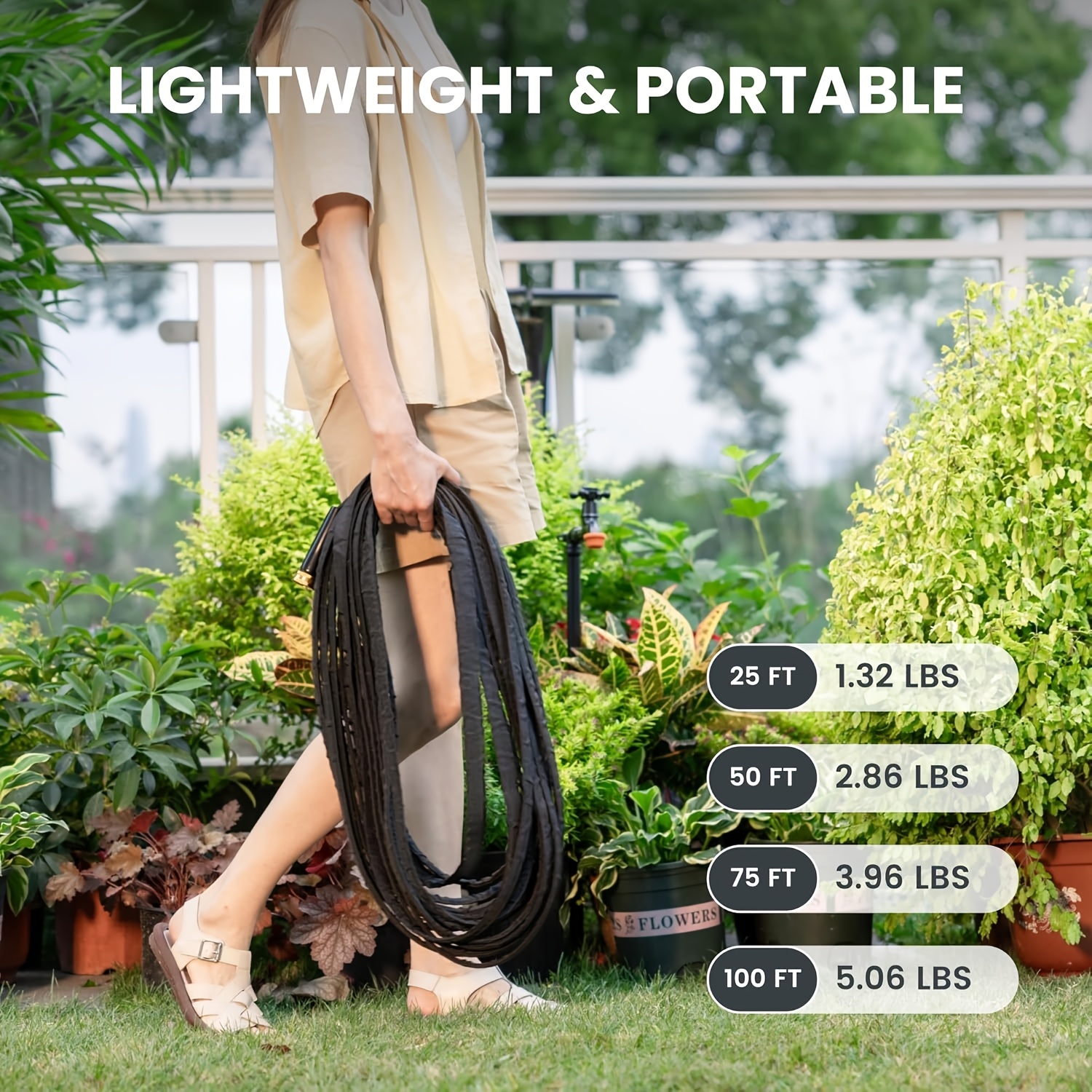
Fabric hoses can also appeal to casual gardeners because their lightweight construction may make them easier to carry and handle. Actual kink resistance depends on the hose’s design and construction.
Product Positioning for Garden Centers
- Key selling points: Lightweight handling, compact storage, convenient watering, and easy organization
- Target buyers: Weekend gardeners, balcony gardeners, and homeowners with small patios
- Packaging strategy: Consider boxed sets with compatible spray nozzles, hangers, or storage accessories
- Placement strategy: Position products near watering tools, planters, and other relevant gardening supplies
- Marketing language: “Lightweight garden hose,” “compact storage,” and “convenient for everyday watering”
For this channel, clear packaging and easy-to-understand benefits can help shoppers make purchasing decisions without needing detailed technical knowledge.
3. E-commerce: Choose Garden Hoses With Demonstrable Benefits
Online shoppers cannot physically handle a hose before purchasing. Product images, comparison charts, videos, and concise feature descriptions therefore play an important role in communicating product value.
Recommended garden hose types: Expandable hoses and metal garden hoses
Expandable hoses are particularly suitable for demonstration-led listings because videos can show how the hose expands during use and becomes more compact after draining.
Metal garden hoses may appeal to buyers interested in an alternative exterior construction. However, claims such as “chew-proof,” “puncture-proof,” and “leak-proof” should only be used when supported by product design, testing, and appropriate evidence.
Product Positioning for E-commerce
- Key selling points: Visible product benefits, ease of handling, storage convenience, and clearly specified fittings
- Target buyers: Online gardening shoppers, homeowners, and customers seeking convenient watering solutions
- Listing strategy: Highlight hose length, material, diameter, compatible connectors, working pressure, and included accessories
- Visual assets: Use product demonstrations, close-up fitting images, application photos, and clear size comparisons
- Marketing language: “Compact garden hose storage,” “easy-to-handle watering hose,” and “compatible fittings”
A short demonstration video can show setup, expansion, watering, and drainage where applicable. Product claims should remain consistent across images, titles, descriptions, and packaging.
For online distributors and private-label brands, the strongest listing is not necessarily the one with the most claims. It is the one that clearly communicates relevant benefits and sets accurate expectations.
4. Discount Retail: Prioritize Affordable and Space-Efficient Products
Discount retail customers are often highly price-conscious and may prioritize an accessible purchase price over advanced features. Products should deliver the basic functionality expected for their intended watering applications.
Recommended garden hose types: Flat hoses and entry-level expandable hoses
Flat hoses can offer compact packaging and efficient storage when their design supports these benefits. Entry-level expandable hoses in shorter lengths may also suit price-sensitive customers who want a compact watering solution.
Product Positioning for Discount Retail
- Key selling points: Affordable pricing, basic watering functionality, and compact packaging
- Target buyers: Budget-conscious households and occasional gardeners
- Product options: Consider shorter lengths, such as 25 ft or 50 ft, where supported by the product range
- Packaging strategy: Use straightforward hang cards or simple packaging that communicates the essential specifications
- Marketing language: “Everyday watering solution,” “space-saving storage,” and “practical garden hose”
Distributors should balance purchase price with material quality, connector reliability, packaging requirements, and expected product use. A lower retail price should not come at the expense of unclear specifications or misleading performance claims.
5. Garden Hose Channel-Matching Framework
The following framework can help distributors and brand owners organize product assortments according to channel requirements.
| Retail Channel | Typical Buyer Priorities | Recommended Hose Types | Main Selling Message |
|---|---|---|---|
| Hardware stores | Durability and repeated use | Rubber, heavy-duty | Designed for demanding outdoor use |
| Garden centers | Convenience and easy storage | Expandable, fabric | Lightweight and easy to store |
| E-commerce | Visual product benefits and clear specifications | Expandable, metal | Demonstrable features and convenient handling |
| Discount retail | Affordability and basic functionality | Flat, entry-level expandable | Practical watering at an accessible price |
These recommendations provide a starting point rather than a fixed rule. The best assortment also depends on local demand, climate, retail pricing, product specifications, and customer feedback.
6. How Distributors Can Build a Channel-Specific Garden Hose Assortment
Selecting products by channel is only the first step. Distributors and brand owners should also align specifications, packaging, and product messaging with each channel’s requirements.
Step 1: Define the Target Buyer
Identify whether the primary customer is a professional user, casual gardener, online shopper, or price-sensitive household. This determines which product benefits deserve the most attention.
Step 2: Match Hose Construction to the Intended Use
Compare rubber, expandable, fabric, metal, flat, and heavy-duty hoses based on material, flexibility, weight, storage requirements, pressure ratings, and expected usage.
Step 3: Set Channel-Specific Specifications
Confirm hose length, diameter, fittings, working pressure, temperature range, packaging format, and accessory requirements. Avoid assuming that one specification suits every channel.
Step 4: Adapt Packaging and Product Content
Hardware stores may benefit from specification-led packaging, while garden centers may favor easy-to-understand convenience benefits. E-commerce listings need strong visuals and complete product information, while discount retail packaging should clearly communicate essential features and value.
Step 5: Review Sales Performance
Monitor sell-through, return rates, customer feedback, and SKU performance by channel. Use these findings to adjust product selection, packaging, and future purchasing plans.
Frequently Asked Questions
What is the difference between garden hoses for hardware stores and garden centers?
Hardware store buyers often prioritize durability and performance for demanding projects. Garden center shoppers may place greater emphasis on lightweight handling, convenience, and storage. Rubber and heavy-duty hoses can suit the former, while expandable and lightweight fabric hoses may suit the latter.
Which garden hose types suit e-commerce?
Expandable hoses are well suited to visual demonstrations because their changing size can be shown in videos. Metal hoses may also attract interest through their construction and intended-use features. Product suitability ultimately depends on verified specifications, pricing, customer demand, and listing quality.
Which garden hoses suit discount retailers?
Flat hoses and entry-level expandable hoses can be considered when affordability and compact packaging are priorities. Distributors should evaluate product quality, fitting reliability, and intended use alongside the target retail price.
Can one garden hose product serve multiple sales channels?
Yes. A single hose model may serve multiple channels if its specifications and price meet each channel’s needs. However, product bundles, packaging, accessories, and messaging may need to change to match different buyer expectations.
What should distributors consider when sourcing garden hoses from a manufacturer?
Key considerations include material options, available hose types and lengths, working pressure, fitting compatibility, product testing, packaging customization, minimum order quantities, lead times, and private-label support. Buyers should confirm specifications and applicable test documentation before placing orders.
Build a Garden Hose Assortment for Your Target Market
XIANLIN manufactures a range of garden hose types, including expandable, metal, rubber, fabric, flat, and heavy-duty hoses. Distributors and brand owners can evaluate suitable products and packaging options according to their target retail channels.