

Spray Tube Accessories
Build Spray Tool Sets for Retail and OEM
Nozzles, spray guns and watering wands should be planned as related tool families. Reach, pattern control, trigger style and inlet compatibility define the application, while valve and joint construction determine the main reliability risks.
A focused range usually separates short cleaning tools, general garden nozzles and longer watering wands. Buyers can then create price tiers through materials, branding and packaging without multiplying every internal mechanism.
This category is intended for garden brands, hardware distributors and hose-kit customers that need coordinated spray tools.
-
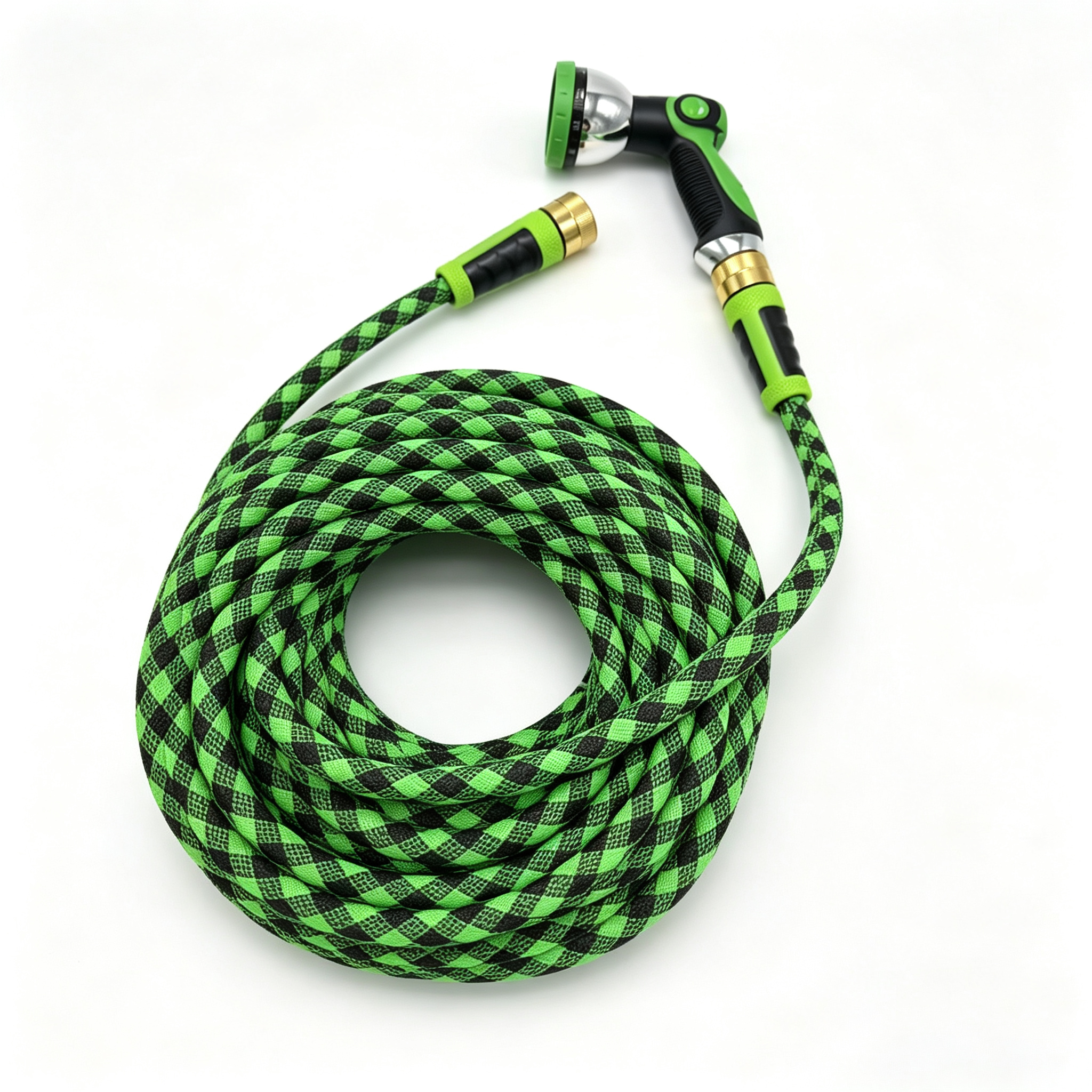 Expandable Garden Hoses
-
 Metal Garden Hoses
-
 Rubber Garden Hoses
-
 Fabric Garden Hoses
-
 Flat Garden Hoses
-
Heavy-Duty Garden Hoses
Tool Type, Reach and Control Options
Product direction: coordinated nozzle, spray-gun and watering-wand families
Range variables: reach, spray pattern, flow control, body material and inlet connection
Set options: single tool, hose-end kit and multi-piece watering set
Packaging: hanger card, color box or private-label kit
SKU details: exact dimensions, flow rates, inlet standards and MOQ are stated in the product specification sheet
Spray Tool OEM and Retail Assortments
Spray-tool development can cover nozzle inserts, pattern graphics, thumb or trigger control, metal versus reinforced-plastic body, swivel inlet, wand length, grip color, brand mark and hanger card. We can coordinate individual tools and multi-piece watering sets. Each variation should be sampled with the intended hose connection, and the internal valve and tube joint should retain the same approved construction across color changes.
Too many small appearance variants can create tooling and inventory cost without improving sell-through. A stronger range groups products by reach and control type, then uses color, branding and pack configuration to create retail tiers while keeping the valve and joint construction stable.
Pattern, Valve and Joint Reliability Checks
Spray-tool inspection focuses on the points that create returns: inconsistent patterns, valve leakage, stiff triggers, loose wands and poor inlet retention. We check flow and pattern at set distances, closed-position leakage, trigger cycles, drop resistance, joint pull and wet-grip handling. The results help separate cosmetic changes from changes that require a new mechanical approval.
- Spray pattern
- Flow rate
- Valve leakage
- Trigger cycles
- Drop resistance
- Wand-joint pull
- Inlet retention
- Wet-grip usability
Send the product family, inlet standard, required reach, pattern set and retail pack format before a spray-tool assortment is sampled.