



Efficient irrigation stands at the heart of every thriving garden. Yet, in flower bed management, achieving uniform water distribution remains one of the most persistent challenges. Traditional watering methods, such as sprinklers or handheld hoses, often fail to deliver consistent moisture deep into the soil. As a result, plants experience irregular hydration, uneven root development, and increased susceptibility to disease.
This challenge has driven landscapers and horticultural engineers to explore more sustainable and precise solutions. Among these, the soaker pipe—a porous irrigation hose designed to deliver water directly to the root zone—has emerged as a transformative tool for flower bed irrigation. It bridges the gap between efficiency and environmental responsibility, optimizing both water use and plant health.
1. The Complexity of Flower Bed Irrigation
Flower beds are among the most dynamic and delicate elements in landscape design. They often combine plants with diverse root depths, water needs, and soil preferences. Maintaining uniform hydration across such diversity is difficult, particularly when using surface-level watering methods.
Sprinklers, for instance, create attractive arcs of water but suffer from evaporation and wind drift. Water rarely penetrates deeply enough, leaving lower roots dry while upper layers remain overly moist. Hoses and watering cans, while flexible, depend heavily on manual consistency and cannot guarantee equal water delivery across large or irregularly shaped beds.
Additionally, dense plant canopies obstruct water flow, preventing even coverage. Overhead watering also wets foliage unnecessarily, which promotes fungal diseases and mildew, particularly in humid climates. In contrast, flower bed irrigation using soaker pipes delivers a low-pressure, ground-level solution that directly targets root zones without wasting water.
2. Understanding Soaker Pipe Technology
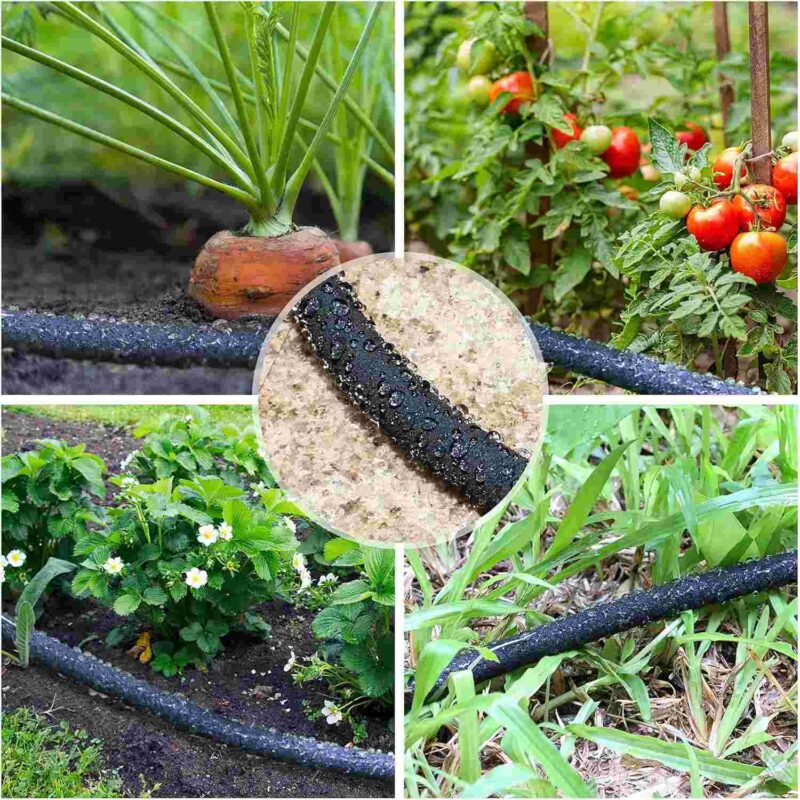
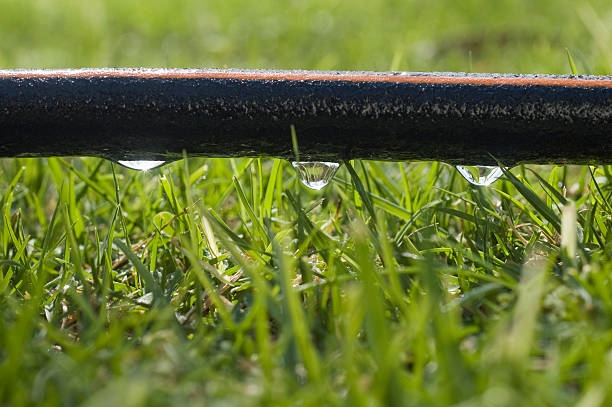
Soaker pipes, also known as porous or drip hoses, are made from flexible materials such as recycled rubber or polyethylene. Their porous walls allow water to seep slowly and evenly along the hose’s entire length. This capillary action creates a gentle, consistent release that saturates the soil without runoff.
Unlike drip emitters, which release water at discrete points, soaker pipes for flower bed irrigation provide continuous linear moisture. This design makes them ideal for densely planted areas, irregular layouts, and long beds where multiple species coexist.
Moreover, modern soaker pipes incorporate micro-perforation and pressure-regulated designs. These improvements maintain uniform flow even when the terrain slopes or the hose extends over long distances. Combined with automated timers, they enable precise irrigation scheduling that conserves water and reduces labor.
3. The Root Zone Advantage
The primary advantage of soaker pipe irrigation in flower beds lies in its root-focused delivery. Since the water seeps directly into the soil, it encourages deep root growth. Plants with strong, well-developed roots demonstrate greater drought resistance and nutrient uptake efficiency.
In contrast, shallow watering from above promotes superficial root systems that depend on frequent irrigation. Over time, this weakens plant stability and makes them vulnerable to temperature stress. Soaker pipes create an optimal moisture gradient that keeps the lower soil consistently damp while allowing upper layers to dry slightly, reducing weed germination.
Furthermore, since water remains near the soil surface rather than splashing onto leaves or petals, soaker pipe systems minimize the spread of foliar diseases. This root-centric approach aligns perfectly with sustainable horticulture principles, emphasizing both water conservation and plant longevity.
4. Common Irrigation Challenges in Flower Beds
Despite technological progress, irrigation systems still face several recurring challenges in flower bed management. These include uneven soil moisture, excessive evaporation, and localized flooding.
Sandy soils drain too quickly, while clay-based soils retain water excessively. Sloped beds compound these issues by allowing water to flow downhill, starving higher sections. Even with advanced sprinklers or drip emitters, such imbalances persist, leading to irregular plant growth patterns.
Additionally, as gardens expand or evolve seasonally, irrigation setups must adapt without disturbing existing root systems. Traditional buried lines or fixed sprinklers offer limited flexibility in this regard. Soaker pipes, being flexible and modular, solve this problem by allowing gardeners to reposition or extend their systems easily.
The challenge of achieving uniform flower bed irrigation is not only mechanical but also ecological. Overwatering depletes nutrients through leaching and fosters anaerobic soil conditions that suffocate roots. Underwatering, conversely, triggers drought stress and stunted growth. The fine control offered by soaker pipes effectively bridges this delicate balance.
5. Designing Efficient Soaker Pipe Layouts
The efficiency of a flower bed irrigation soaker pipe system depends greatly on layout design. Gardeners must consider the shape of the bed, plant density, soil permeability, and water pressure.
For long, rectangular beds, parallel runs spaced 30 to 45 centimeters apart typically provide even coverage. In circular or irregular beds, spiral or serpentine patterns ensure that no area remains dry. Moreover, adjusting the flow rate based on soil type prevents oversaturation—slower rates for clay soils, faster for sandy textures.
Proper layout design also accounts for water source distance. Longer runs require pressure regulators or flow control valves to maintain consistent output. Installing moisture sensors adds another layer of precision by triggering irrigation only when soil dryness exceeds a specific threshold.
This intelligent integration ensures that soaker pipe irrigation systems deliver targeted efficiency while adapting to seasonal variations, minimizing both waste and maintenance costs.
6. Comparing Soaker Pipes with Drip and Sprinkler Systems
While all irrigation systems aim to distribute water efficiently, each technology suits different contexts. Sprinklers excel in lawns and open areas but waste water through evaporation. Drip emitters offer precision but require complex installation and frequent maintenance.
Soaker pipes, however, represent a middle ground between these two. They combine the simplicity of hoses with the precision of drip systems, offering uniform coverage at lower cost. Because the entire hose surface releases water, installation requires minimal calibration. Maintenance is straightforward—occasional flushing prevents clogging, and modular connectors make replacement easy.
Moreover, flower bed soaker pipes are environmentally friendly. Many are manufactured from recycled materials, and their low-pressure operation reduces energy use compared to pump-driven systems. In sustainability-driven landscaping, these advantages make them increasingly attractive for both residential and commercial applications.
7. Environmental and Economic Benefits
Water scarcity has become a defining environmental challenge across many regions. In this context, soaker pipe irrigation for flower beds offers significant conservation benefits. Studies show that soaker systems can reduce water usage by up to 70% compared to conventional sprinklers, largely due to reduced evaporation and runoff.
Economically, this efficiency translates into lower utility costs and extended lifespan for garden infrastructure. Since the pipes operate at low pressure, they impose minimal stress on water supply systems and require fewer repairs.
Additionally, precise irrigation reduces fertilizer waste. Water-soluble nutrients remain concentrated in the root zone instead of leaching away. This not only enhances plant growth but also mitigates environmental runoff—a critical factor for eco-friendly landscaping.
By aligning with green gardening practices, soaker pipe systems embody the broader trend toward sustainable urban ecology. They merge performance, durability, and environmental stewardship into a single cohesive solution.
8. Maintenance and Longevity Considerations
Like any irrigation system, flower bed soaker pipes require regular inspection to maintain efficiency. Over time, mineral buildup or soil particles can block the porous surface. Periodic flushing—simply running water at full pressure for several minutes—clears most obstructions.
To prevent algae growth or bacterial contamination, gardeners should avoid leaving standing water in the system. During colder months, draining and storing hoses indoors prevents damage from freezing.
High-quality soaker pipes, constructed from UV-resistant and recycled rubber compounds, can last several years even under continuous outdoor exposure. This durability makes them ideal for professional landscaping projects where long-term reliability is essential.
9. Innovations in Smart Soaker Irrigation Systems
Modern soaker pipe irrigation systems are evolving with smart technologies. Integration with digital controllers, weather sensors, and mobile apps enables real-time control over irrigation schedules. Automated systems can adjust flow rates based on humidity, temperature, or rainfall forecasts.
Additionally, new materials with variable porosity allow adaptive flow control. Some systems now feature embedded micro-valves that regulate water output dynamically along the hose’s length, ensuring uniform saturation even on uneven terrain.
As smart garden ecosystems expand, soaker pipes will play a central role in creating responsive irrigation networks that balance automation with sustainability. This shift transforms them from passive hoses into intelligent irrigation infrastructure.
10. Practical Applications in Landscape and Horticulture
Soaker pipes for flower beds are not limited to home gardens. They are widely used in professional horticulture, municipal landscaping, and botanical installations. Public parks rely on them for flower borders and decorative shrub beds, where visual uniformity is crucial.
In greenhouse cultivation, soaker systems ensure stable moisture for potted plants without wetting foliage or walkways. In commercial settings—such as resorts and urban plazas—these systems provide discreet, reliable irrigation that supports continuous flowering and aesthetic appeal.
Their modular nature allows designers to integrate them beneath mulch, pathways, or gravel layers, preserving visual minimalism while delivering functional performance.
Conclusion: Precision, Sustainability, and Plant Harmony
The challenges of flower bed irrigation lie not only in delivering water but in understanding how plants absorb it. Soaker pipes represent a precise, sustainable, and adaptable solution that harmonizes engineering with ecology. By delivering moisture directly to the root zone, they reduce waste, strengthen plants, and simplify maintenance.
As environmental pressures grow and urban landscapes demand greener efficiency, flower bed irrigation soaker pipes will continue shaping the future of horticultural design. They embody a subtle revolution—transforming irrigation from a routine task into a science of controlled nourishment.
In the balance between beauty and functionality, these quiet pipes whisper the rhythm of sustainable growth.