


As global climate patterns shift, the traditional image of the lush, sprinkler-fed vegetable garden is rapidly becoming a relic of the past. For modern gardeners, “Summer” no longer just means harvest time; it increasingly signals a period of high-stakes survival. With record-breaking heatwaves and stringent municipal water restrictions becoming the new normal, the survival of home-grown food sources hinges on a single factor: water efficiency.
In this harsh environment, the drip irrigation system—and its essential component, the soaker hose—emerges not just as a convenience, but as the “capillaries” of a resilient garden. These systems deliver life-sustaining moisture with surgical precision, ensuring that every drop serves its purpose. This article explores the mechanics of drip irrigation as a form of survival insurance, detailing how these tools allow a garden to thrive even when the taps are nearly dry.
1. The Crisis: Why Traditional Watering Fails in a Heatwave
When a heatwave strikes, the immediate instinct of most gardeners is to grab a traditional hose or turn on the sprinklers. However, during extreme heat, these methods are remarkably counterproductive.
The Evaporation Tax
Traditional overhead sprinklers throw water into the air, exposing it to heat and wind before it ever touches the soil. In temperatures exceeding 35°C (95°F), a staggering 30% to 50% of that water evaporates instantly. This “evaporation tax” means you are paying for water that never reaches your plants.
The Pathogen Risk
Furthermore, overhead watering wets the foliage of the plants. In humid heat, wet leaves become a playground for fungal diseases and blights. When water sits on the leaves of tomato or cucumber plants during a hot evening, you are essentially inviting pathogens to destroy your crop.
Municipal Restrictions
Many municipalities now implement “Level 3” or “Level 4” water bans during droughts. These bans almost always target sprinklers and open-hose watering. However, because drip irrigation and soaker hoses are so efficient, they are frequently exempted from these restrictions, allowing you to maintain your food source while others watch their gardens wither.
2. The 90% Efficiency Rule: Precision over Power
The fundamental advantage of a drip system is its efficiency. While a sprinkler system might operate at 50-60% efficiency, a well-configured drip or soaker hose system achieves a 90% or higher utilization rate.
Direct-to-Root Delivery
Drip irrigation works on the principle of “targeted delivery.” Instead of saturating an entire area, the system delivers water slowly and directly to the root zone. Since the water stays below the surface or at the soil line, evaporation is virtually eliminated. This ensures that the plant’s “capillaries”—its fine root hairs—have a constant, reliable source of hydration.
Slow Infiltration
Soaker hoses, made from porous materials that “sweat” water along their entire length, allow for deep infiltration. Rapid watering often leads to “runoff,” where the dry, baked surface of the soil repels water, causing it to pool and flow away. Conversely, the slow drip of an irrigation line softens the soil’s surface tension, allowing moisture to penetrate deep into the subsoil where roots are protected from surface heat.
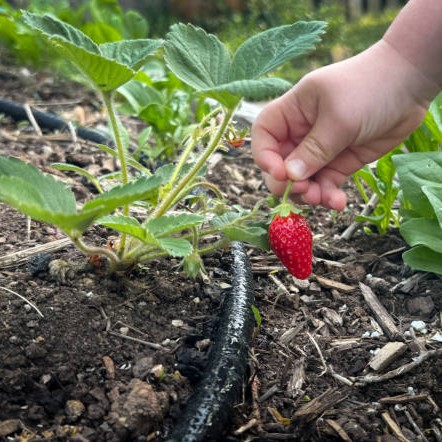
3. The Hardware of Resilience: Soaker Hoses and Drip Lines
To build a “survival insurance” policy for your garden, you must understand the tools that make up these vital capillaries.
The Soaker Hose: The Porous Workhorse
A high-quality soaker hose is the backbone of the efficient garden. These hoses feature thousands of microscopic pores. When under low pressure, they release water in tiny droplets. This method is ideal for densely planted vegetable beds or rows of leafy greens. You can snake the hose directly around the base of the plants, ensuring the water goes exactly where the biology demands it.
Drip Emitters: The Precision Surgeons
For larger, individual plants like tomatoes, peppers, or fruit trees, drip emitters offer even more control. These small devices plug into a main supply line and release water at a specific rate (e.g., 2 liters per hour). This allows you to tailor the water delivery to the specific needs of each plant, preventing both underwatering and the waste of overwatering.
Timers and Pressure Regulators
A truly resilient system requires automation. Smart irrigation timers allow you to schedule watering for the coolest part of the night (usually between 3:00 AM and 5:00 AM). This timing further reduces evaporation and ensures the plants are fully hydrated before the sun begins to beat down.
4. Strategic Survival: Techniques for Extreme Water Scarcity
Having the tools is the first step; using them strategically is what ensures a harvest during a drought.
The Synergy of Mulching
A drip irrigation system reaches its peak performance when combined with mulching. By placing a thick layer (5-10cm) of straw, wood chips, or dried grass clippings over your soaker hoses, you create a “cool zone.” The mulch acts as an insulator, shielding the damp soil from the sun. Underneath the mulch, the drip system maintains a consistent micro-climate of moisture, reducing the required watering time by up to 50%.
Pulse Irrigation
During extreme heat, plants can go into “stress shutdown.” To prevent this, gardeners can use a technique called “pulse irrigation.” Instead of one long watering session, you set your timer to run the drip system for shorter bursts throughout the day. This keeps the root zone consistently cool and prevents the soil from ever reaching the “permanent wilting point.”
Prioritizing Your Crops
If water restrictions become severe, your drip system allows you to prioritize. You can easily shut off certain lines to “sacrificial” ornamental plants while keeping the lines open for high-value food crops like potatoes and legumes. This modularity is a key feature of the drip system’s role as insurance.
5. Soil Health: The Long-Term Benefit of “Capillary” Watering
Watering efficiently doesn’t just save the plants; it protects the soil—the very foundation of your garden’s resilience.
Preventing Soil Erosion and Compaction
Heavy watering with a hose or sprinkler can compact the soil, squeezing out the oxygen that roots and beneficial microbes need to survive. The gentle “sweating” of a soaker hose preserves the soil structure (tilth). It keeps the soil airy and friable, which is essential for nutrient uptake.
Maintaining the Microbiome
The beneficial fungi and bacteria in your soil require a stable moisture level. Rapid wet-dry cycles caused by irregular manual watering can kill off these microbes. A drip system provides the steady, “capillary” moisture flow that keeps the soil microbiome alive, ensuring that when the heatwave breaks, your plants have the biological support they need to resume rapid growth.

6. Economic and Environmental Impact
Beyond the survival of the plants, the transition to drip irrigation makes sense from a resource management perspective.
-
Financial Savings: In regions with high water costs, a 90% efficient system pays for itself within a single growing season. By eliminating waste, you lower your utility bills while increasing your crop yield.
-
Reduced Weed Growth: Sprinklers water everything, including the weeds in the aisles. Drip systems only water the plants you want. Consequently, you spend less time weeding and use less water on unwanted vegetation.
-
Energy Conservation: Less water usage means less energy spent by municipal systems to treat and pump water, making your garden a part of the broader climate solution.
7. Installation and Maintenance: Ensuring Longevity
To ensure your “survival insurance” doesn’t fail when you need it most, proper installation and maintenance are required.
-
Filter Your Water: Small drip emitters can clog with sediment. Always install a fine-mesh filter at the start of your system to keep the “capillaries” clear.
-
Check for Leaks: Periodically walk your lines. A small puncture in a soaker hose can lead to a localized flood and a waste of water.
-
Winterize: In colder climates, ensure you drain your lines before the first frost to prevent the material from cracking, ensuring they are ready for the next summer’s heat.
8. Conclusion: Building a Resilient Future
The “Garden of the Future” respects the scarcity of its most precious resource. As heatwaves become more frequent and water becomes more valuable, the move toward drip irrigation and soaker hoses is no longer optional—it is essential.
By mimicking the natural, slow delivery of moisture seen in the Earth’s own “capillary” systems, these tools provide a bridge between survival and success. They allow us to maintain our home food sources, protect our local ecosystems, and build a resilient lifestyle in the face of an unpredictable climate. When the next heatwave arrives and the water restrictions are posted, your garden will not be a victim. It will be a thriving, hydrated testament to the power of efficient engineering.