


In the pursuit of a thriving vegetable garden, water is undoubtedly the most critical input. However, traditional watering methods—such as overhead sprinklers or manual hose spraying—are surprisingly inefficient. Recent agricultural studies suggest that up to 60% of water applied through overhead irrigation never reaches the target: the root system. Instead, it evaporates in the air, drifts with the wind, or sits on the foliage, where it often does more harm than good.
This phenomenon, known as “Foliar Waste,” represents a significant loss of resources and a missed opportunity for plant growth. To solve this, savvy gardeners and commercial growers are turning to soaker hoses (seepage irrigation). By shifting the focus from the leaves to the soil, this technology delivers moisture with surgical precision. This article explores the mechanics of porous seepage irrigation and provides evidence on how this method can increase the yield of common vegetables like tomatoes and cucumbers by as much as 30%.
1. The Physics of Porous Seepage: How the Soaker Hose Works
The effectiveness of a soaker hose lies in its material composition. Typically manufactured from a blend of recycled rubber and high-density polyethylene, the walls of the hose contain thousands of microscopic pores.
The “Sweat” Mechanism
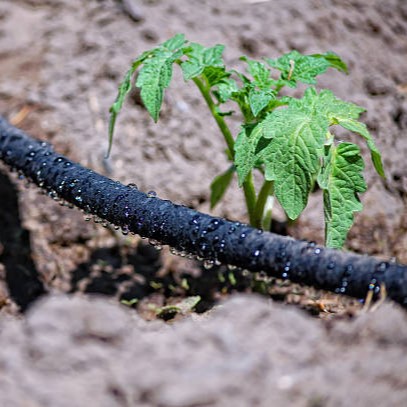
Unlike a traditional drip line, which emits water through spaced emitters, a soaker hose “sweats” along its entire length. When water enters the hose under low pressure, it creates a gentle, consistent seepage. This allows the water to exit the hose slowly, matching the soil’s natural infiltration rate.
Capillary Action and the Wetting Pattern
As the hose seeps, the soil acts like a sponge. Through capillary action, moisture moves horizontally and vertically from the hose. This creates a “wetting curtain” beneath the surface. Instead of creating puddles on top of the soil, the soaker hose ensures that the entire root zone stays hydrated without becoming anaerobic (waterlogged).

2. The Hidden Cost of Foliar Waste
Overhead watering is the standard for many, but it carries three major biological risks that can stunt vegetable production.
High Evaporation Rates
On a warm afternoon, water sprayed through the air can lose 20% to 40% of its volume to evaporation before it even touches a leaf. Once it lands on the leaf, more water evaporates without ever reaching the soil. A soaker hose eliminates this mid-air loss.
Foliar Pathogens and Fungal Growth
Many of the most devastating vegetable diseases, such as Powdery Mildew and Downy Mildew, thrive when leaves remain wet for extended periods. When you spray water on cucumber or tomato leaves, you create a humid microclimate that invites fungal spores to germinate. By delivering water directly to the ground, soaker hoses keep the “canopy” dry, drastically reducing the need for chemical fungicides.
Sun Scorch and Nutrient Leaching
Water droplets on leaves can act like tiny magnifying glasses, focusing sunlight and causing “leaf burn” or scorch. Furthermore, heavy overhead watering can wash away foliar fertilizers or natural protective oils from the plant’s surface, weakening its defense mechanisms.
3. The 30% Yield Boost: Evidence from the Field
How does a simple change in watering lead to a 30% increase in harvest? The answer lies in consistency and reduced stress.
Tomatoes: Preventing Blossom End Rot
Tomatoes are notorious for being sensitive to moisture fluctuations. If the soil swings between “bone dry” and “flooded,” the plant cannot transport calcium efficiently. This leads to Blossom End Rot, a condition that can ruin half of a harvest. Soaker hoses maintain a “Goldilocks” level of moisture—never too wet, never too dry—which ensures a steady supply of nutrients, resulting in larger, more uniform fruit.
Cucumbers: Maximizing Fruit Set
Cucumbers have a high water content and shallow root systems. Any drought stress during the flowering stage causes the plant to drop its blossoms or produce bitter, misshapen fruit. Seepage irrigation provides the constant hydration required for rapid cell expansion in the fruit. Data shows that cucumber plants irrigated at the root zone produce 25-30% more “market-grade” fruit than those watered via sprinklers.
4. Root System Development: Deep vs. Shallow
Plants are opportunistic. If water is only available at the surface (via light overhead watering), the roots will grow upward and stay shallow.
Promoting Deep Anchoring
A soaker hose encourages deep root development. Because the water seeps slowly, it penetrates deep into the subsoil. The roots follow this moisture trail downward. Deep-rooted plants are more resilient against heatwaves, can access minerals from deeper soil layers, and provide a sturdier anchor for heavy, fruit-laden vines.
Reducing Soil Compaction
Heavy droplets from traditional hoses can “tamp down” the soil, destroying its structure and reducing the oxygen available to roots. The gentle seepage of a soaker hose preserves soil tilth, keeping the ground airy and friable—a perfect environment for beneficial microbes and earthworms.
5. Economic and Environmental Impact
In addition to better vegetables, the soaker hose offers significant savings for the modern grower.
-
Water Conservation: Most users report a 50% to 70% reduction in water usage. In regions with water restrictions or high utility costs, the soaker hose pays for itself within a single growing season.
-
Time Savings: Automation is simple with a soaker hose. By connecting the system to a basic timer, you eliminate the need for hours of manual labor with a spray wand.
-
Fertilizer Efficiency: If you use water-soluble fertilizers, a soaker hose ensures the nutrients go directly to the roots rather than being wasted on the garden path or evaporating on the leaves.
6. Installation Logic: Optimizing Your Seepage System
To achieve the best results, one must install the soaker hose with precision.
-
Layout Patterns: For wide beds, use a “snaking” or S-pattern to ensure total coverage. For row crops like tomatoes, run the hose parallel to the stalks, about 2-4 inches away from the base.
-
The Power of Mulch: To maximize the “Invisible Guardian” effect, cover your soaker hose with 2-3 inches of organic mulch (like straw or wood chips). This further reduces evaporation and keeps the hose protected from UV degradation.
-
Pressure Regulation: Soaker hoses operate best at low pressure (usually around 10-25 PSI). Using a pressure regulator prevents the hose from “spraying” and ensures a true seepage effect.

7. Comparative Analysis Table: Why Soaker Hoses Win
| Feature | Overhead Sprinkler | Manual Hose Spraying | Soaker Hose (Seepage) |
| Water Efficiency | Low (30-50%) | Medium (50-60%) | High (90%+) |
| Disease Risk | High (Wet Leaves) | Medium | Low (Dry Leaves) |
| Root Penetration | Shallow | Uneven | Deep & Uniform |
| Labor Requirement | Low (Automated) | High (Manual) | Low (Automated) |
| Yield Impact | Standard | Variable | +30% Increase |
8. Conclusion: The Shift to Active Moisture Management
The era of “spray and pray” gardening is coming to an end. As we face more unpredictable weather patterns and a greater need for resource efficiency, the tools we use must become more intelligent. The porous soaker hose represents the pinnacle of “Active Moisture Management.”
By eliminating foliar waste and focusing every drop on the root zone, you do more than just save water. You create a stable, disease-resistant environment that allows your vegetables to reach their full genetic potential. Whether you are growing prize-winning tomatoes or crisp, juicy cucumbers, the path to a 30% yield increase begins beneath the soil surface.
Invest in the root zone. Stop the foliar waste. Let your garden “sweat” its way to success.