


There is nothing more frustrating during outdoor property maintenance than a leaking garden hose connection. What begins as a minor, irritating drip at the outdoor spigot quickly turns into lost water pressure, muddy walkways, and wasted utility costs. In the lawn and garden industry, connection leaks stand as the number one consumer complaint.
Most standard retail hoses rely on a single, rigid plastic washer inside the coupling to hold back water pressure. Over a few weeks of exposure to thermal shifts and high municipal water pressure, these basic seals compress permanently, crack, or slip out of alignment, leading to unavoidable leaks.
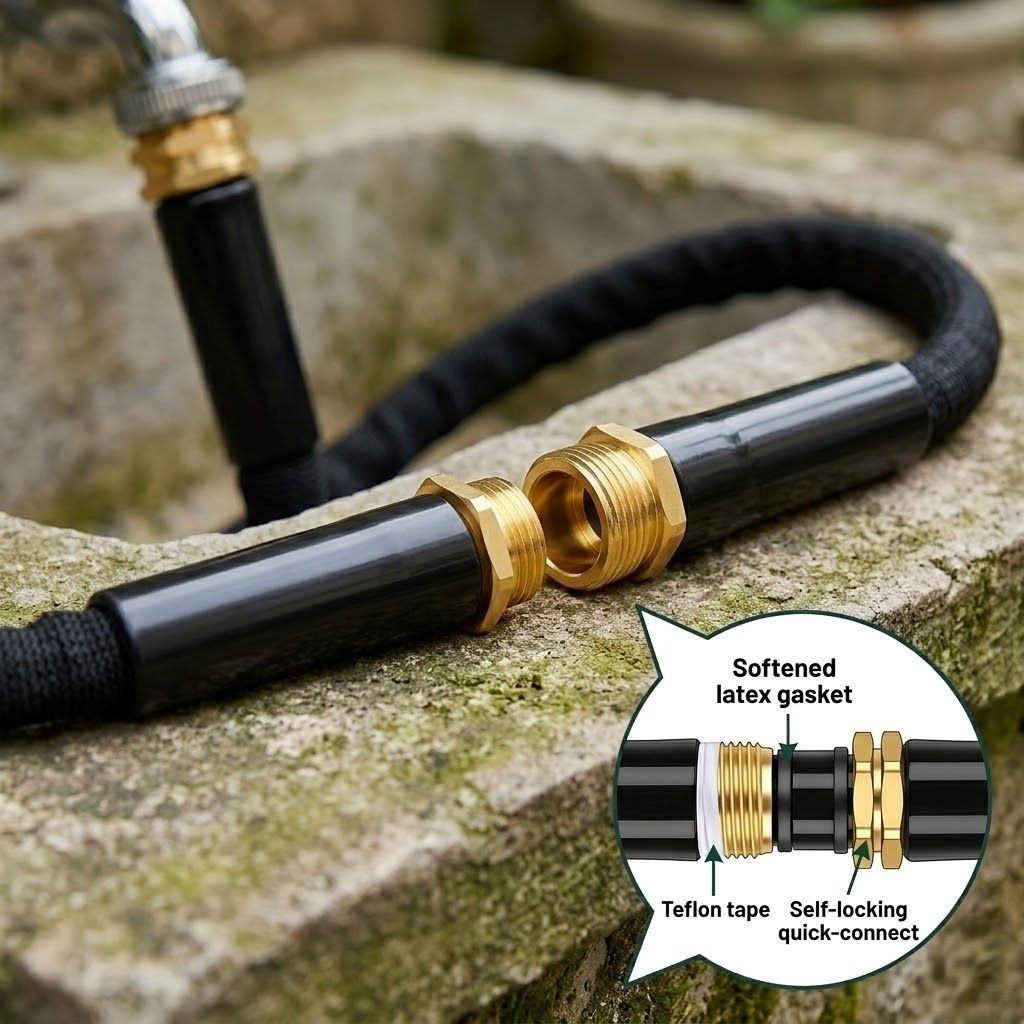
Eliminating these failures requires looking past single-barrier seals. True commercial reliability is achieved by using a comprehensive, multi-layered system: a triple leak-proof design garden hose framework. By layering physical compression seals, threaded gap fillers, and wear-reducing mechanical joints, users can maintain a completely drip-free connection across multiple seasons of heavy use. This engineering guide explores the physics behind this three-tier sealing system and outlines professional maintenance workflows to help you optimize your outdoor water setups.
1. The Three-Layer Sealing Matrix: How They Work Together
A truly reliable plumbing connection doesn’t just block water at one point; it manages fluid dynamics across three distinct areas of potential failure: physical compression gaps, microscopic thread paths, and mechanical wear points.
 [Water Source Spigot]
          │
          ▼
 ┌────────────────────────────────────────────────────────────────────────┐
 │ Layer 1: Softened Latex Gaskets ──> Compresses tightly to seal face gap │
 ├────────────────────────────────────────────────────────────────────────┤
 │ Layer 2: Teflon Thread Tape     ──> Fills spiral microscopic gaps      │
 ├────────────────────────────────────────────────────────────────────────┤
 │ Layer 3: Quick-Connect Fitting  ──> Stops mechanical thread wear       │
 └────────────────────────────────────────────────────────────────────────┘
          │
          ▼
 [Drip-Free Output Performance]
First Layer: Dual Softened Latex Gaskets (Face Matrix Sealing)
The primary line of defense features a dual-gasket configuration, positioned at both the upper and lower seating faces of the interior brass coupling. Unlike stiff, cheap plastic washers that harden when exposed to cold well water, these specialized gaskets are molded from highly pliable, softened latex compounds. When you thread the coupling onto a faucet, the pliable latex compresses under low torque, expanding horizontally to fill any structural imperfections or uneven gaps along the mating surface.
Second Layer: Teflon Tape Barrier (Microscopic Thread Sealing)
While face gaskets stop direct water flow, high fluid pressure can still force water backward through the spiral paths of the mating threads, resulting in a slow, continuous weeping leak. Applying an ultra-thin layer of polytetrafluoroethylene (PTFE), commonly known as Teflon tape application, solves this problem. As the male and female metal threads mesh together, the soft Teflon tape cold-flows into the microscopic clearances between the threads, forming a tight, watertight physical barrier that blocks slow seeps.
Third Layer: Quick-Connect Fittings (Mechanical Wear Reduction)
The outer layer of protection utilizes a precision-machined quick-connect hose fitting. Repeatedly screwing and unscrewing bare metal threads directly onto an outdoor spigot eventually strips the threads and deforms the soft rubber washers. By installing a permanent quick-connect adapter onto the spigot, you eliminate this repetitive friction. The internal spring-loaded O-ring mechanisms inside the quick-connect handle all the coupling stress, preserving the integrity of your main connection points and maintaining a reliable, leak-free seal over the long term.
2. Diagnostic Flowchart: Pinpointing and Resolving Hose Leaks
When a leak occurs in your irrigation setup, you can isolate and resolve the issue quickly by tracing the water’s escape path with this structured diagnostic framework:
                              [Isolate Leak Location]
                                         │
        ┌────────────────────────────────┼────────────────────────────────┐
        ▼                                ▼                                ▼
[Dripping from Coupling Interface]  [Slow Weeping from Threads]      [Moisture along Hose Body]
        │                                │                                │
        ▼                                ▼                                ▼
  Check Gasket Seat               Verify Teflon Wrap               Inspect Core Wall
  - Look for cracks/dry rot       - Check wrap direction           - Look for pinholes/tears
  - Replace aged washers          - Re-wrap 3-5 turns clockwise    - Cut and splice damaged section
A. Heavy Dripping from the Coupling Joint
-
The Root Cause: The internal gasket has either dry-rotted, shifted out of alignment, or permanently deformed from over-tightening.
-
The Repair Protocol: Unscrew the female connector and pull out the old washer. Inspect the interior seating rim for mineral buildup, clean out any debris, and perform a fresh rubber washer replacement. Hand-tighten the coupling, then add a quarter-turn with pliers; avoid over-tightening, as crushing the gasket can cause it to tear and split.
B. Slow, Consistent Weeping Out of the Thread Seams
-
The Root Cause: Inadequate thread engagement or missing tape sealant, allowing pressured water to slowly wind through the spiral thread paths.
-
The Repair Protocol: Disconnect the joint and clean off any shredded thread debris. Reapply premium PTFE tape using correct wrapping techniques to fill the thread valleys before reconnecting the hardware.
C. Water Sweating or Spraying Along the Hose Length
-
The Root Cause: Structural failure of the hose wall, often caused by kinking stress, internal tube fatigue from being left under pressure in hot sunlight, or sharp punctures.
-
The Repair Protocol: For minor punctures near an end joint, slice off the damaged segment cleanly with a utility knife and install a heavy-duty brass repair mender. To maintain long-term reliability across the entire lawn, look for a premium, kink-resistant, triple leak-proof design garden hoses built with multi-layered latex cores and braided protective outer sleeves.
3. Sealing Component Maintenance and Installation Standards
To keep your irrigation system running at peak performance without drops in water pressure, maintenance teams and homeowners should follow these precise installation standards:
            PTFE Tape Installation: Wrap 3-5 Turns Clockwise
            ┌──────────────────────────────────────────────┐
            │ ↻ (Clockwise Motion Matches Thread Drive)    │
            └──────────────────────────────────────────────┘
            Prevents tape unraveling during hardware assembly.
-
PTFE Thread Application Guidelines: When wrapping Teflon tape, always wrap in a clockwise direction, looking directly at the open end of the male thread. This aligns the tape with the rotation of the female coupling as it tightens. If you wrap counter-clockwise, the threads will catch the edge of the tape and bunch it up during assembly, ruining the seal. Begin at the first thread ridge, keep tight tension on the spool, and wrap 3 to 5 full layers before tearing the tape cleanly into the valleys.
-
Seasonal Gasket Replacement Schedules: Even high-grade softened latex washers are subject to material fatigue from UV rays, ozone exposure, and temperature extremes. To prevent sudden failures during the peak summer watering season, establish a preventative maintenance routine to replace your primary gaskets every 1 to 2 years. Storing your connection accessories indoors during freezing winter months also helps prevent the rubber elements from freezing and cracking.
Fluid Control Engineering Comparison Matrix
| Structural Attribute | Standard Economy Hose Setups | XIANLIN Triple-Seal Framework |
| Primary Joint Seal | Single flat, rigid vinyl washer | Dual-zone softened latex compression gaskets |
| Thread Interface Protection | None (Direct bare metal-to-metal contact) | PTFE tape barrier layer |
| Connection Mechanism | Repetitive manual thread twisting | Precision quick-connect mechanical coupling |
| Thread Wear Profile | High risk of cross-threading and stripping | Zero thread wear after initial installation |
| 100 PSI Pressure Performance | Prone to spraying and misting at spigots | Guaranteed zero-drip, uniform water flow |
Conclusion: Investing in Long-Term Watering Efficiency
In both residential and commercial irrigation systems, long-term reliability begins with smart and preventative component design. A well-engineered watering setup not only improves daily efficiency but also helps reduce maintenance costs, water waste, and unexpected system failures over time.
However, many traditional hose systems suffer from leaking connections, unstable water pressure, and poor durability under continuous use. As a result, users often face unnecessary water loss and damaged outdoor work areas. Instead of relying on outdated equipment, upgrading to a professional triple leak-proof design garden hose system provides stronger structural protection and more stable irrigation performance.
By combining reinforced hose construction with precision-engineered sealing technology, the system actively withstands high water pressure and demanding daily operation without leakage. Moreover, advanced quick-connect brass fittings improve connection stability while simplifying installation and maintenance tasks.
To support different irrigation requirements, XIANLIN offers customizable hose solutions designed for gardens, landscaping projects, agricultural use, and commercial outdoor maintenance. Contact XIANLIN’s technical support team today to explore tailored hose configurations, select precision-machined brass quick-connect systems, and build a high-performance irrigation solution optimized for your environment.